- Dairy Cows
- Vitalac Animal Nutrition
Dairy Farming: after a challenging summer, what are the impacts on cows and rations?
The hot weather may be behind us, but its effects can still be felt on dairy farms. Milk production, reproduction, hoof health, maize quality and forage stocks: the consequences of summer can continue to affect herds and rations over the coming months.
Amélie Cornillet, Ruminant Technical Manager at VITALAC, reviews the main areas to watch and the key measures to anticipate as autumn approaches.

Summer 2026 was marked by several successive periods of hot weather. Once temperatures have dropped, can we consider that the risk for cows is behind us?
“In previous years, significant heat stress peaks have been observed in September, and sometimes even into early October. We are therefore not yet out of the risk period.
The graph opposite illustrates how the level of heat stress experienced by cows changes over the course of a day, highlighting the proportion of time spent at different levels of heat stress.”

What delayed effects of heat stress should farmers continue to watch for over the coming weeks?
“Heat stress does not only have short-term consequences.
In herds most affected by heat stress, for example in poorly ventilated, enclosed buildings, milk production can take several weeks to return to normal levels.
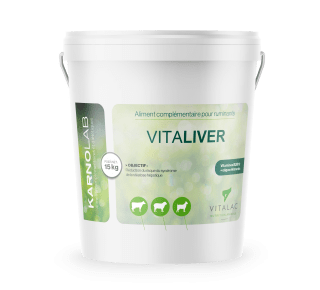
Cows tend to mobilise their body reserves to meet the higher energy and protein requirements associated with heat stress. Their liver, which converts stored fat into energy that can be used by the cells, has therefore been under considerable strain. A course of liver-supporting nutrients, such as rumen-protected choline, betaine and methionine, can often help increase feed intake and, in turn, support a recovery in milk production.
Cow fertility was also affected throughout the summer, with disrupted cycles, less visible signs of oestrus and lower conception rates, even when cows showed signs of heat. As a result, farmers may see fewer calvings in the spring. Where possible, this can be anticipated by inseminating more heifers during the summer, using synchronisation protocols.
Finally, there may be an increased risk of lameness towards the end of summer. Cows tend to spend more time standing to help dissipate heat, particularly in poorly ventilated buildings. The additional pressure on their feet can lead to an increase in lameness associated with sole ulcers and abscesses. A peak in digital dermatitis (Mortellaro disease) is also often observed at this time of year.”
Heat and drought have also had a major impact on crops. What consequences could this have for rations this autumn?
“The 2026 maize crop will most likely have lower digestibility than in previous years, due to increased lignification of the plant under heat stress conditions. In some fields, ears were poorly filled or even poorly pollinated, which will negatively affect starch content. Together, these two factors are likely to result in lower milk yield at an equivalent level of forage intake.
Finally, the main consequence of this dry season will be the significant reduction in crop yields, raising concerns about insufficient forage stocks to last through the year. To address this risk, farmers can already consider storing cereals or purchasing co-products such as beet pulp, soybean hulls, corn gluten feed or distillers’ grains, where available. If conditions allow, autumn grass cuts can also be planned. Purchasing hay and straw is another option.”
In this context, what are the benefits for farmers of keeping and making better use of their own cereals?
“Storing and using home-grown cereals, where possible, is a more cost-effective alternative to purchasing feed to compensate for a starch deficit caused by poor-quality maize or by reducing the amount of maize silage in the ration.
To make cereals less acidogenic while improving their protein and energy value, they can be treated with XL GRAIN. The benefits include an average increase of 5 percentage points in protein content per kg of DM (bringing wheat to around 17% crude protein), as well as a significant reduction in the risk of ruminal acidosis thanks to its inherent buffering effect. This means that several kilograms of treated cereals can be included in dairy cow rations without increasing the risk of acidosis. Treatment can be carried out in a mixer wagon, using a grinder equipped with a dosing system, or with a mobile feed-processing unit.
The cereal must then be stored while the reaction takes place, which requires 2 to 3 weeks, before it can be incorporated into the ration. The combined cost of grinding and treatment is around €60 per tonne of cereals, which remains less expensive than purchasing co-products with an equivalent protein content.”
Key takeaways
- The risk of heat stress is not completely over: episodes can still occur in September and even into early October.
- The effects of summer can persist: milk production, fertility and hoof health remain key areas to monitor in the weeks ahead.
- The quality and quantity of the 2026 maize crop need to be monitored: lower digestibility and starch content, together with more limited stocks, may require adjustments to rations.
- Planning ahead now can help prepare for autumn: monitor the animals, assess forage stocks and consider alternatives to secure nutrient supply in the ration.