- Poultry
- Pigs
Acidification of drinking water in pig and poultry farming: a practical lever for securing water quality, digestive balance and performance.
In pig and poultry farming, drinking water is often taken for granted. Yet, between the water inlet and the drinking point, its quality can deteriorate discreetly: warming in the lines, biofilm development, microbiological drift and reduced palatability. In the field, the consequences are well known: less dynamic consumption, a more fragile digestive balance, deterioration of the building environment, less uniform batches and less consistent performance.
Acidification of drinking water makes it possible to regain control over this key parameter. Provided, of course, that it is approached as a genuine technical programme.

Why drinking water is a major issue in pig and poultry farming
On farm, water is much more than just a carrier. Consumed in quantities twice as high as feed, it is a genuine management lever and a direct link between the livestock building, the distribution network and the animals’ digestive balance. When its quality deteriorates within the pipework, the effects are not always immediately dramatic. However, they can quickly become part of the farmer’s day-to-day reality: less uniform animals, more delicate transitions, more frequent digestive disorders, wetter litter in poultry, ammonia odours and less robust technical and economic performance.
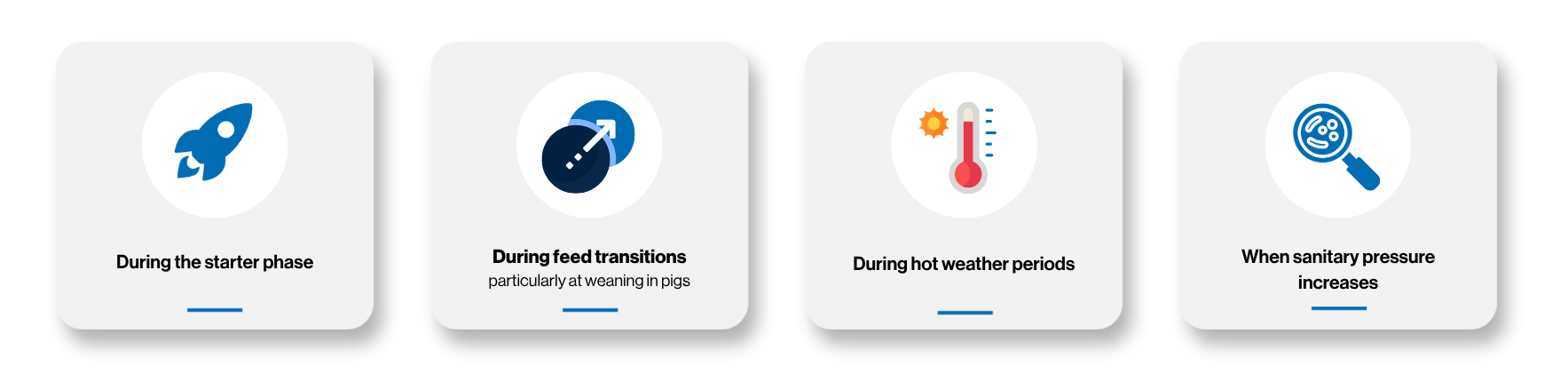
These vulnerabilities are particularly noticeable during sensitive periods:
The invisible problem: water that is suitable at the inlet is not always under control at the end of the line
This is the key issue with drinking water on farm. Water that is clean at the building inlet can deteriorate throughout its journey through the network. It warms up, stagnates in certain areas and encourages biofilm formation in the pipework. This biofilm then becomes a critical point, as it affects the actual quality of the water supplied to the animals.
For the farmer, the question is therefore not only “is my water good to begin with?”, but rather:
does the water actually reaching the animals support performance… or does it contribute to weakening the farm balance?
Acidifying drinking water: how it works
Acidification involves adding organic acids to drinking water, particularly three key acids: formic, lactic and propionic acids. Their benefit is twofold. Firstly, they lower and stabilise the pH of the water, helping to limit microbial development, mainly coliforms, and slow down biofilm re-establishment within the distribution network. Secondly, once ingested, they help create a more favourable digestive environment and support microbiota balance.
Visible effects in day-to-day management
The point is not simply to “lower the pH”, but to achieve tangible results:
- safer water in the lines,
- animals that drink well,
- more stable digestive balance,
- fewer setbacks during risk periods,
- livestock buildings that are easier to manage,
- more consistent performance.
In poultry, this often means a more regular start, better-managed litter, fewer ammonia odours, fewer cases of pododermatitis or dirty eggs, and improved flock uniformity.
In pigs, it very quickly relates to intake, weaning management, control of feed transitions and fewer digestive disturbances.
The trap: thinking it is enough to “add a little acid”
This is probably the most important point. Not all acidification strategies are equal. To be effective, drinking water acidification must be properly reasoned and adapted to each farm.
Several parameters need to be taken into account:
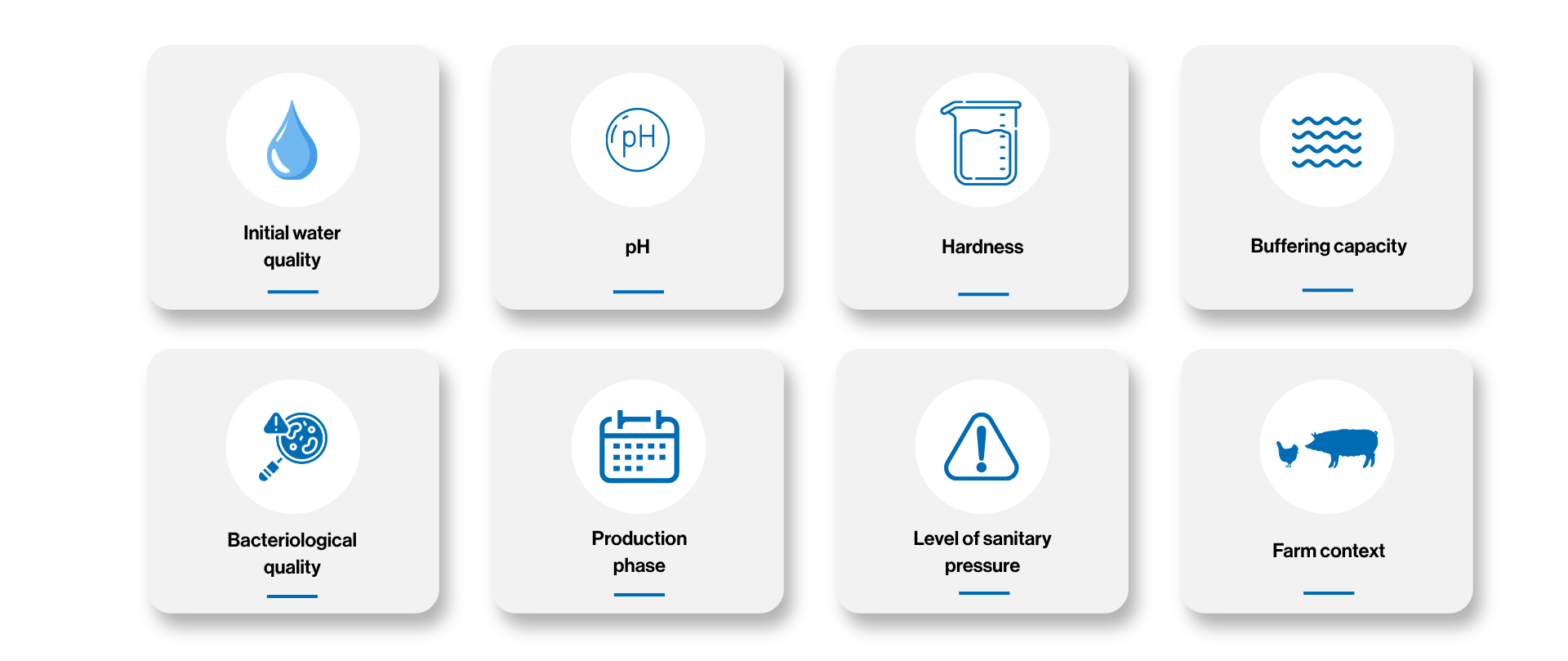
In other words, effective acidification is not simply a one-off addition. It should be considered as a programmed acidification strategy, adjusted over time and according to the farm’s actual needs, at an effective dose of 1 L/m³.
In summary,
Drinking water acidification should no longer be presented as a simple pH corrector. In both pig and poultry farming, it is a lever for overall control: water quality, line hygiene, digestive security, livestock comfort and consistent performance.
To be truly effective, it must be approached as a complete programme:
the right product, the right dosage, reliable measurement, suitable equipment and solid technical support.
This is the whole purpose of the VITALAC approach:
helping you regain control of drinking water, with the right tools and the right method.
Would you like to secure the drinking water on your farm?
Our teams can support you in setting up a reasoned acidification programme: solution selection, dosage setting, pH monitoring, dosing pump and on-farm technical follow-up.